
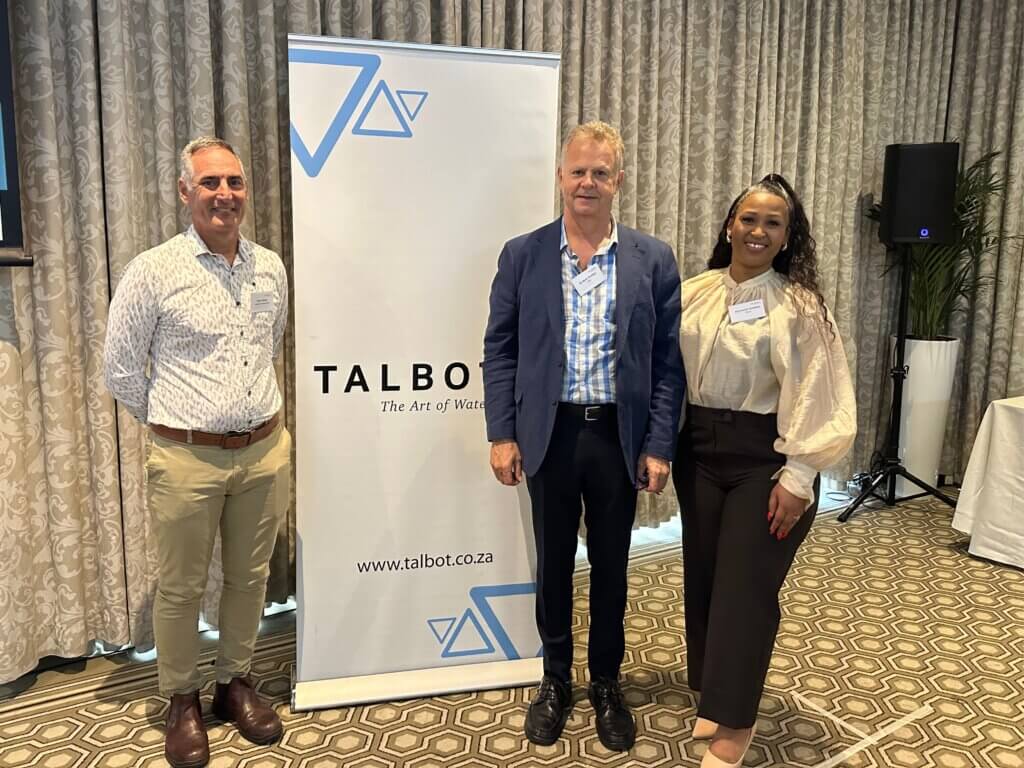
Insights from Talbot's Annual Water Security Seminar
On 16 October, Talbot brought together more than 70 industry professionals, water sector representatives and business leaders at the Country Club Johannesburg for its annual seminar discussing South Africa’s Water Landscape under the theme ‘Strengthening Water Security and Business Continuity for Industry and Mining’.
The discussion moved from South Africa’s national water challenges to regional supply pressures and, ultimately, the practical steps businesses can take to protect their operations amidst growing water security risks.
The Current Water Landscape in South Africa
Dr Sean Phillips, Director-General of the Department of Water and Sanitation, highlighted the complexity of South Africa’s water landscape, where supply challenges vary significantly between regions. Infrastructure failures, rising demand and water losses are placing increasing pressure on existing resources.
“Water is a very local function. There is no national water grid,” Phillips explained, emphasising that the causes of water shortages differ from one area to another.
The latest figures paint a concerning picture. Phillips noted that non-revenue water averages 47% across all Water Service Authorities (WSAs). He also pointed to the latest Blue, Green and No Drop report findings, which rated 107 of 144 water services authorities as performing poorly or critically in their drinking water or wastewater systems. In addition, the average daily consumption of water per capita in South Africa is 218 litres, with Gauteng using more than 250 litres, well above the international average of 173 litres. With South Africa being one of the 30 most water-scarce countries in the world, this is not sustainable.
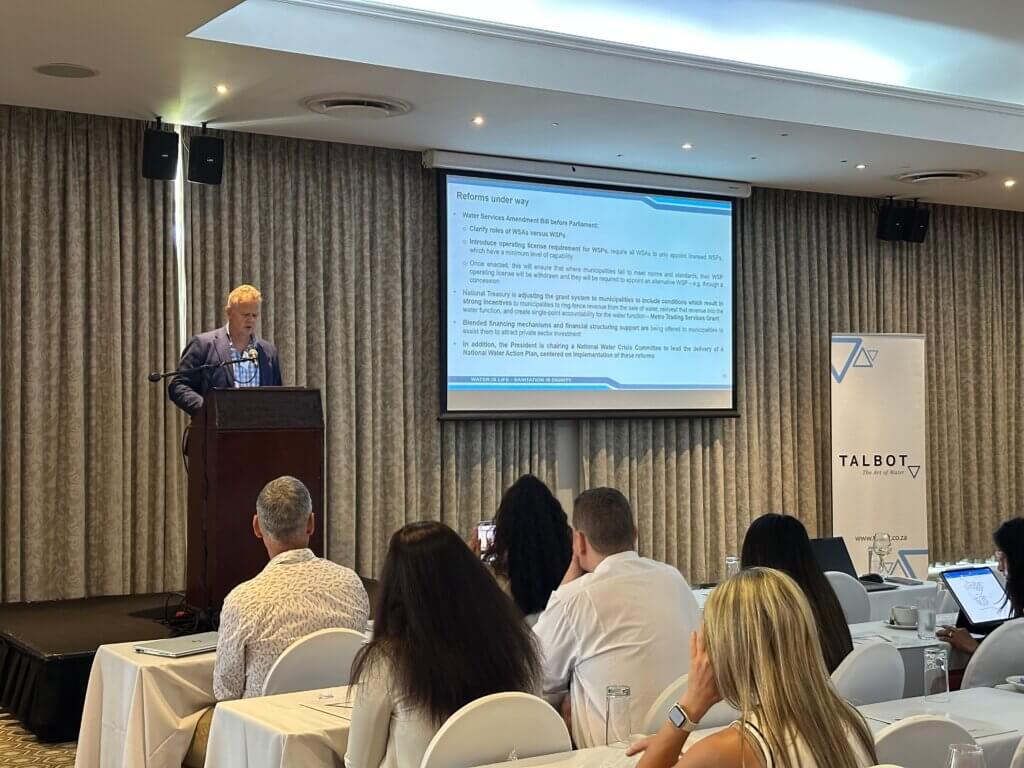
Phillips identified an inappropriate municipal service delivery model as a key cause of the crisis, with water revenue often diverted away from essential maintenance and infrastructure investment. He highlighted that reforms are needed to transition municipalities towards a utilities model, ring-fence water revenue and strengthen accountability and financial management to improve service delivery and attract investment. Reforms are already underway, including the Water Services Amendment Bill before Parliament to clarify responsibilities and introduce licensing requirements for water service providers.
With South Africa already harnessing around 75% of its sustainably usable surface water resources, Phillips stressed that there is no single solution. Reducing water losses, improving infrastructure, managing demand and diversifying water sources will all be essential to strengthening long-term water security.
Regional pressures and opportunities for change
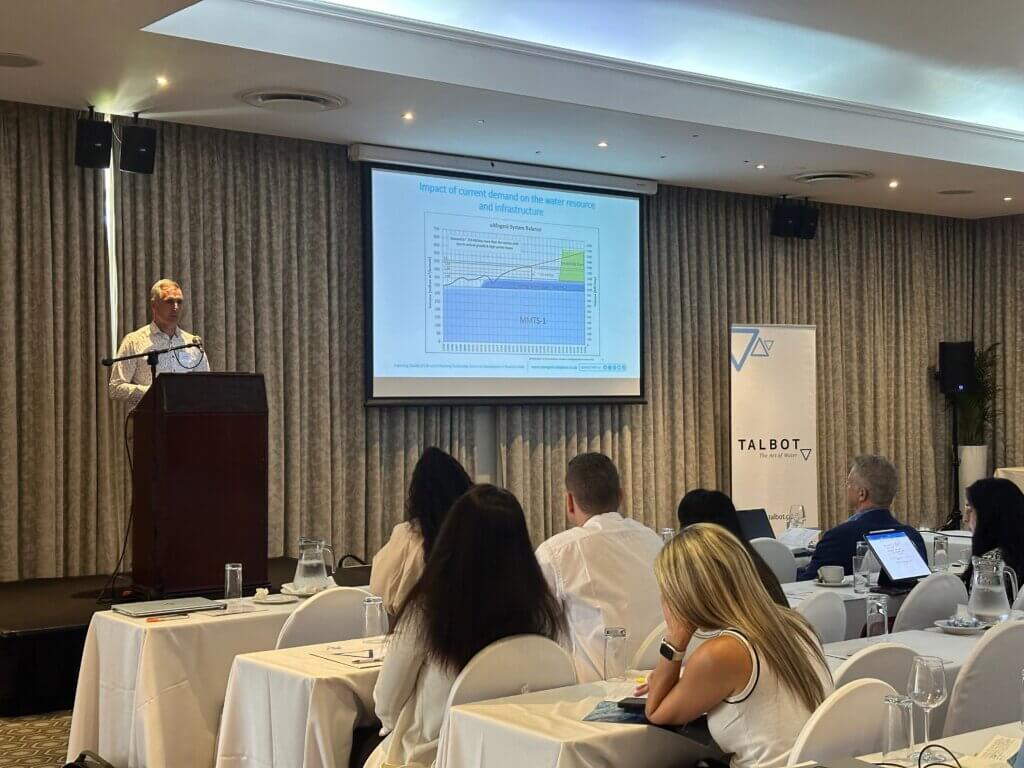
Kevin Meier, Manager: Planning Services at uMngeni-uThukela Water, brought the discussion closer to home, examining regional supply constraints, infrastructure requirements and the importance of managing existing water resources more effectively. “The non-revenue water in some of these municipalities is as high as 90%, which has a significant impact on water supply,” Meier highlighted. He also raised concerns about the El Niño conditions on the horizon as South Africa enters the 2026/27 summer rainfall season, with an increased risk of drier and hotter conditions.
Addressing these challenges will require more than new infrastructure. Opportunities include ring-fencing municipal water revenue to fund maintenance and investment, introducing performance-based contracts to reduce water losses, and recovering water from wastewater treatment works and industrial processes. Improving municipal financial sustainability and unlocking investment in underserved areas will also be important to addressing infrastructure backlogs and strengthening service delivery.
For businesses, these challenges reinforce the need to look beyond municipal supply and take a more proactive approach to managing water risk.
Strengthening business continuity for Industry and Mining
Nontando Rambau, Talbot’s Optimisation & Management Lead, brought the discussion directly into industry and mining, outlining a practical approach to improving water security through four steps: assess, optimise, recover and improve.
“The key message today is simple: water is no longer just a utility; it’s a strategic business asset. Organisations that proactively manage water risk will be better positioned to protect operations, control costs, and ensure long-term resilience,” Rambau said.
The first step is understanding how water systems perform, assessing treatment processes, operations, maintenance and water quality management to identify risks, performance gaps and opportunities for improvement. From there, optimisation helps businesses understand where water is used, identify inefficiencies and address the root causes of abnormal consumption.
Water recovery and reuse can help reduce reliance on unreliable external supplies. Talbot has worked with clients to achieve water recovery rates up to 75% (Read: Talbot and Sovereign set new global benchmark in industrial water recovery). This reduces the demand on bulk water utilities’ and demonstrates that there is significant potential for businesses to recover water within their own operations.
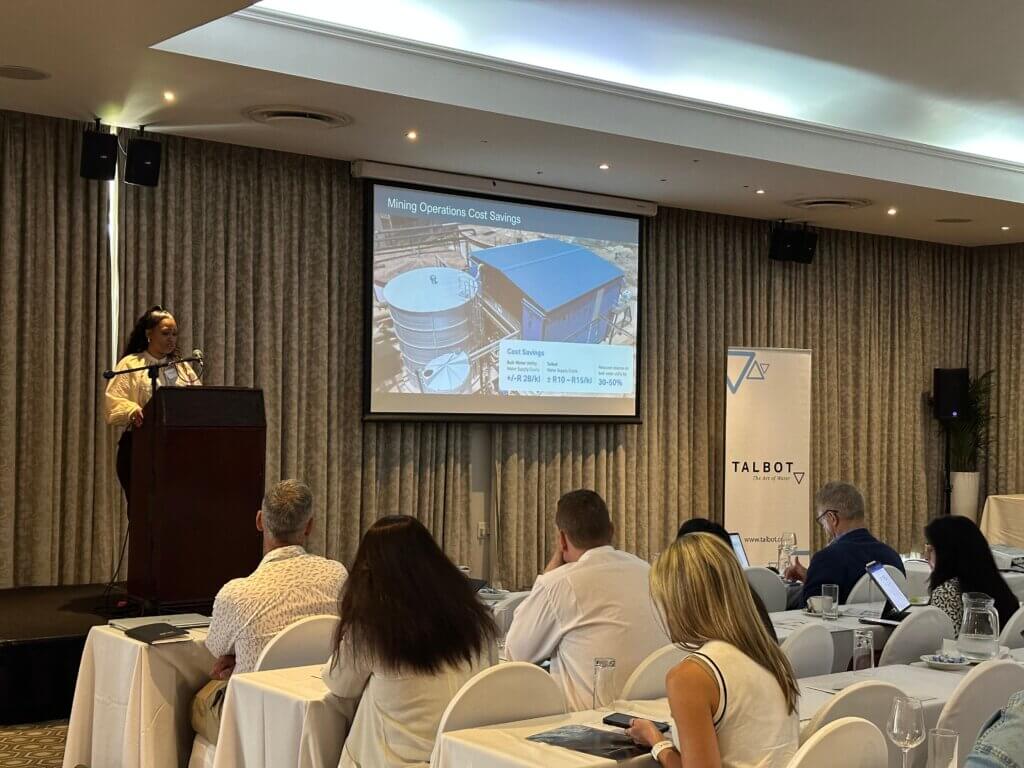
This translates into business continuity and can result in tangible cost savings. In one mining application, Talbot implemented a water treatment solution that delivered savings of R39,000 to R54,000 per day – equivalent to approximately R14-million to R20-million annually. This improved operational efficiency and water security by reducing reliance on the bulk water utility by nearly 50%, contributing to the site’s water independence.
These interventions show how water management can move beyond compliance and environmental responsibility to become a practical business strategy.
The seminar reinforced the message that water security is a shared responsibility. Businesses do not have to wait for supply constraints to affect production before acting.
By understanding their water use, optimising processes, recovering and reusing water, and exploring alternative supply options, organisations can reduce risk, manage costs and strengthen business continuity.
At Talbot, we help industry and mining clients recognise water as a strategic business asset, providing practical solutions that strengthen water security, improve operational efficiency and support business continuity.
Explore how Talbot can help you make water a strategic business asset. Contact our team to start the conversation.